
Introduction: The Return of NBA Basketball
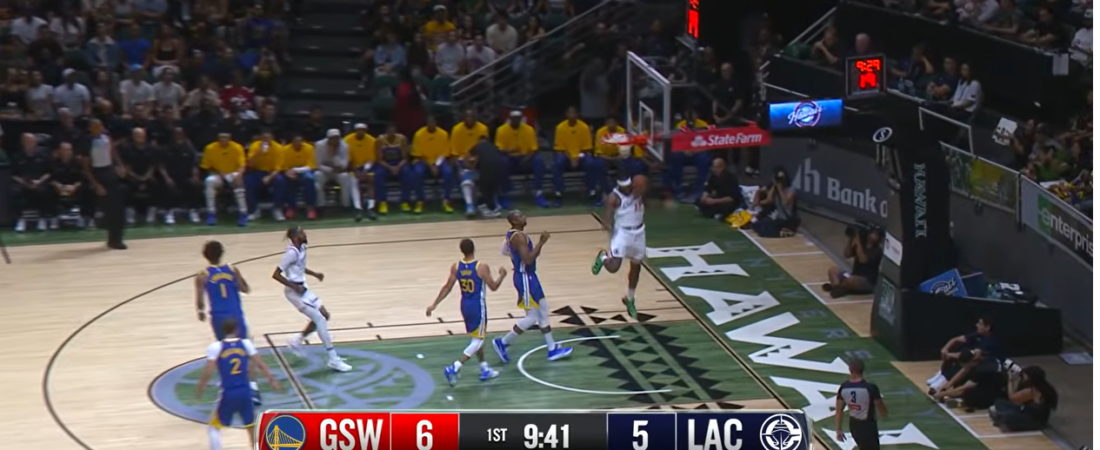
The much-anticipated resumption of NBA action has finally taken place, and the preseason game featuring the Golden State Warriors and the LA Clippers provided exactly what basketball fans could have hoped for. Although preseason matches are generally seen as mere practice sessions in which the starters play only a limited number of minutes and the coaches experiment with their bench players, the competitive spirit naturally increases when two prominent teams from the Pacific Division play against each other.
The detailed analysis examines every aspect of the matchup, including the early-game shifts in momentum and the tactical changes made, the individual performances of the players, the depth of the bench rosters, and the strategic consequences for both teams as they prepare for the demanding 82-game regular season.
First Quarter Execution and Tactical Sets
From the first tip, both head coaches made it obvious that, although there were time limits, getting the basic offensive plays executed was a top priority. The Golden State Warriors began their usual high-energy offence, making use of extensive off-the-ball screening, hand-offs, and dribble-drive kick-outs to cause the Clippers’ defence to move into early rotations.
On the contrary, the LA Clippers concentrated on building a solid presence in the paint at the beginning of the game before widening their attack to the perimeter. They were able to undermine the Warriors’ drop coverage by making use of their high pick-and-roll play, which in turn resulted in clean mid-range shots and baseline cuts.
Key Highlights of the Opening Frame:
The Golden State team aimed to establish an early pace by shooting from beyond the arc, achieving open shots through continuous movement of the ball on the weak side.
The Clippers made use of flexible wing lineups in their defence by employing screens in order to reduce the number of open catch-and-shoot chances available along the perimeter.
In terms of pace and transition play, both sides rushed the ball after gaining possession defensively and focused on attempting fast-break scores before the half-court defenses could get organised.
Bench Depth and Roster Evaluation
Preseason games act as the final opportunity for players who are serving in positional roles, those who have signed two-way contracts, and young draft choices seeking a spot in the starting lineup. When the main starters left during the latter part of the first quarter and carried on into the second quarter, the strength of both teams’ benches was revealed.
The Warriors’ Rotation Dynamics
Golden State places a great deal of importance on players becoming familiar with the system. In the second unit, continuous ball movement and quick decision-making were given priority over depending on individual one-on-one scoring opportunities. The younger guards and wings showed aggressive defensive play, forcing turnovers which in turn created fast transition chances. The reserve forwards gave solid rebounding and set effective screens, thus allowing the other ball-handlers room to drive down the court.
The Clippers’ Secondary Unit
The Clippers displayed a deeper and more physical secondary defence with the aim of winning possession battles. In the second quarter, by using their length on the wings and carrying out aggressive defensive play at the point of attack, Los Angeles disturbed Golden State’s offensive rhythm. The defensive players in that unit concentrated on taking advantage of mismatched one-on-one situations and went for the rim in order to get fouls and take control of the game clock.
Third Quarter Adjustments and Halftime Modifications
The third quarter of an NBA game usually shows which coaching staff has come up with the better halftime adjustments, since when they come out of the locker room both teams are seen to have refined their strategies on both sides of the court.
Defensive Scheme Changes
Golden State carried out targeted blitzes against strong pick-and-roll players, causing them to make hasty passes towards the sidelines and thereby disrupting their ability to play with a clear line of sight.
To protect the paint, the Clippers occasionally employed a 2-3 zone variation, forcing Golden State to attempt contested shots from the perimeter under pressure from the shot clock.
Offensive Flow and Execution
To meet the Clippers’ defensive pressure, the Warriors increased their off-the-ball cuts along the baseline and made more passes to the high post. This in turn created backdoor scoring chances which caused overaggressive defenders on the perimeter to suffer. On the other hand, the Clippers responded by driving aggressively into the lane and used kick-out passes to get open shooters in the corners.
Fourth Quarter Crunch Time and Emerging Players
In the last quarter of the game, high-pressure basketball took place since the main players stayed on the bench, and those competing for the final places on the 15-member roster gave their very best, which led to closely contested defensive plays, vigorous rebounding contests, and key shots being made.
In the final minutes the performance was characterised by precise execution under pressure. The younger players displayed composure by carrying out the late-clock plays, controlling the pace of the game, and making the important defensive stops when the score was still close. The high-pressure minutes available in the pre-season are of great value to the coaching staff when it comes to deciding which players can be relied upon during intense moments in the regular season.
Critical Takeaways for the Regular Season
- Maintaining roster depth and health
Since both franchises have high aspirations for the postseason, it is essential to manage the workload and have depth; the way the important reserve players have performed in this game shows that both teams possess capable players who can step up when injuries occur or when they have back-to-back games in a heavy schedule. - The speed of defensive communication and rotation
In the early preseason matches there were often mistakes in defensive assignments and slow rotations of players. Although both teams experienced a few communications problems at the beginning of the game, their capacity to communicate properly when making switches became much better as the game went on. It will be important for both sides to keep a consistent level of pressure on the perimeter when the regular season begins. - Efficiency in shooting and the movement of the ball
The success of teams in the modern NBA is largely dependent on the quality of their shots and their effective field-goal percentage. The Golden State team achieved high-value open shots as a result of its emphasis on unselfish ball movement, and the Clippers showed that they were capable of producing efficient scoring by using downhill drives and having strong performance in the paint.
Final Thoughts and Looking Ahead
The preseason game gave a good indication of what to expect from both the Golden State Warriors and the LA Clippers in the coming season; since the teams have established a tactical basis, their rotations are starting to take shape and the younger players are making a strong case for earning some playing time, it seems that both sides are in a good position to compete in the extremely difficult Western Conference.
With the preseason schedule progressing, both coaching staffs will study the game film from this match in order to improve their defensive rotations, refine their offensive lineups, and decide on the final training camp roster cuts.
REFERENCES:
Video: WARRIORS at CLIPPERS | NBA PRESEASON FULL GAME HIGHLIGHTS | October 4, 2026
Video URL: https://www.youtube.com/watch?v=5axvVQxzXU0
Source: NBA (published on: October 4, 2026)
Summary: The highlights of the entire game from the preseason match played on October 4, 2026 between the Golden State Warriors and the LA Clippers, including important plays, changes in the rotation, perimeter shooting, and the late-game performances by both teams.