
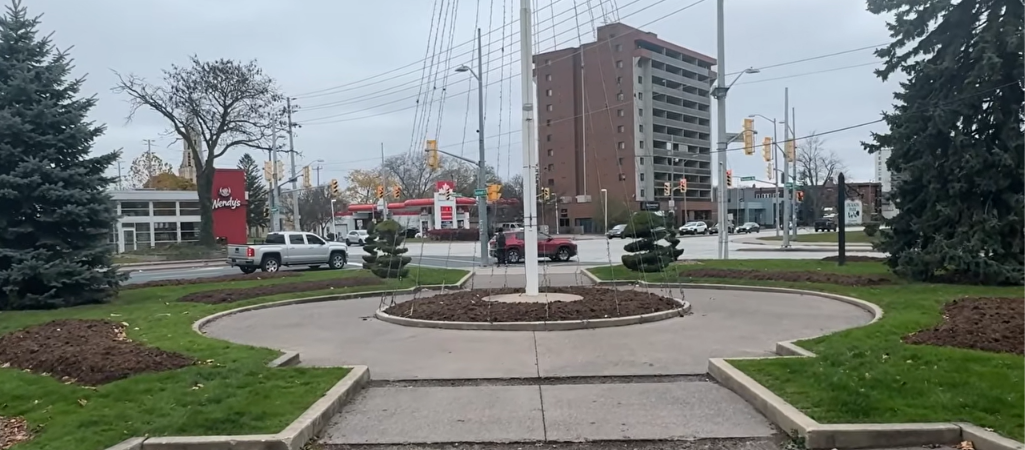
Right across the Detroit River from Michigan in Canada is Windsor, Ontario. It’s Canada’s southernmost city and sits at a latitude which is actually further south than a number of the northern U.S. states. It’s a very distinctive geographical and historical position and as such has a very particular border identity. It’s not some quiet backwater really, it’s a very complex, multi-layered city where early French settlements, the 19th century freedom routes, the 20th century auto industry and the modern city all co-exist within a few miles of the river.
For the reader, the traveller and the researcher, Windsor is so much more than just a transit point between two countries. The various neighbourhoods tell different stories. Walkerville is a classic example of a planned company town, originally built around distilling and early industrial design. The waterfront trail is a perfect example of a working industrial and rail shoreline being re-claimed as a public green space. The city as a whole has a whole host of other stories to tell about the Underground Railroad, the Prohibition era and the rise of the Canadian automobile industry.
Geography and Border Identity Along the Detroit River
Windsor’s key feature is its location right next to Detroit, Michigan, across the Detroit River. Rather than being separated by a remote wilderness or a mountain pass as so many international borders are, you’ve got two major urban economies facing each other across a very busy shipping channel, linked by the Ambassador Bridge and the Detroit-Windsor Tunnel. That geography has had a profound effect on everything from the labour markets and supply chains right through to local accents, media consumption and the general culture of the region.
Long before there were any bridges or border posts along the river, the river corridor was the natural highway for the Indigenous people and subsequently for the European traders and settlers. European agricultural settlement along the river began in the mid 1700s and that’s when the distinct communities started to form which eventually coalesced into the city of Windsor. Over the years separate villages and districts (Sandwich, Walkerville, Ford City etc) developed their own identities and it was only through amalgamation that they became a single municipality.
Living on an international border does of course give you a dual perspective. Looking north across the water from Windsor you can see the Detroit skyline and the river traffic through the Great Lakes system. Looking inland you see the classic streets of Southwestern Ontario, the mature tree canopy and the agricultural links of the region. That constant interplay between the local Canadian scene and the cross-border activity is what gives Windsor its own unique character.
Waterfront Parks and the Transformation of the Shoreline
Today’s riverfront parks in Windsor are some of the most iconic and accessible of the city’s parks, featuring a continuous path for walkers and cyclists with excellent views across the river and out to the adjacent Michigan. The parks are the product of a long term plan rather than simply the result of a naturally occurring landscape. For much of the 19th century and into the 20th century the shoreline was heavily utilised for transport purposes with rail lines, industrial operations and a host of docks providing links to the rail network and to the Great Lakes shipping.
As heavy industry and rail usage along parts of the waterfront declined or moved elsewhere in the latter part of the 20th century, there was a concerted effort by civic leaders and the community to reappropriate the riverfront for public recreation and green space. Over many years of land purchases, planning and phased construction, a number of individual park parcels were connected to form a single, integrated riverfront park system (the Riverwalk) which now extends the length of the Detroit River.
Key Spaces Along the Riverfront
Continuous trail and views: there are properly surfaced paths which enable you to walk or cycle along the water taking in the freighters, the pleasure craft and the cross border skyline.
Memorials and Gardens: there are parks along the route with manicured lawns, gardens and memorials to military service, peacekeeping and community history.
Sculpture and public art: there are a number of outdoor art installations and sculptural pieces along the green corridor which act as visual signposts along the route, transforming the former industrial edge into an open air cultural walk.
Connection to neighbourhoods: it’s directly linked to the adjacent city streets, campuses and historic districts so is a real daily place for people to go and be.
For anyone visiting Windsor, just walking or cycling along the riverfront is the best way of getting your head around the city. It’s the most obvious way of seeing how the city has managed to juggle its history as a port and railhead with its current commitment to accessible public space.
Walkerville: A Planned Distillery Town and Architectural Gem
Walkerville is probably the best example of a nineteenth century industrial town in all of Ontario. It was established in the 1850s by Hiram Walker (an American by birth) and was developed around his riverfront distilling operations. It was a “model town” in every sense of the word rather than just a collection of buildings and houses. Walker didn’t just invest in the distillery, the grain and milling operations and the various transport links (rail, ferry etc) he also invested in the housing and the community amenities and the infrastructure for the workers.
Walkerville’s layout and its architecture still set it apart within Windsor. The streets are wide, the lots are generous and the trees are mature giving it a very distinct sense of scale. There are a number of historic homes, civic buildings and commercial blocks which speak to the periods of prosperity that the area enjoyed from the late Victorian period through into the early 20th century. It has a number of prominent architectural landmarks in the form of Willistead Manor, the various historic churches and the classic commercial buildings. That is what gives it its heritage identity.
Walkerville has come a long way over the years from a purely company town to one of Windsor’s most identifiable residential and commercial areas. It’s a very active area today with a wide range of independent shops, cafes, restaurants and the ongoing work of historic preservation which maintains the physical footprint of how the industrialists built up the urban areas of Southwestern Ontario.
Underground Railroad, Prohibition, and Automotive Roots
Understanding Windsor requires an appreciation of three major historical currents that have had a profound impact on the town: the journey of freedom on the Underground Railroad, the cross-border smuggling of alcohol during Prohibition and the rise of the motor car industry.
The Underground Railroad and Cross-Border Refuge
In the 19th century the Detroit River was a major crossing point for African Americans fleeing slavery in the US via the Underground Railroad. Getting across to the Canadian side meant you were in British territory where slavery had been abolished by imperial statute. Windsor and the surrounding communities of Southwestern Ontario were therefore key destinations and points of refuge for those freedom seekers who were establishing new lives, new families and new churches.
The Prohibition Era
In the early 20th century the differing alcohol laws (and eventually Prohibition in the US) made the Windsor-Detroit border a major centre for legal export warehousing and illicit smuggling. The Canadian distilleries and warehouses were under a very different set of rules to the US prohibition enforcement so the river and the area around it became famous for bootlegging operations, speedboats, trucks and all sorts of cross border schemes to supply the thirsty markets on the other side of the river. That period in time added a very colourful and in some cases quite notorious chapter to the local folklore and regional history.
The Automotive Capital of Canada
Perhaps the most significant economic force in modern day Windsor was the auto industry. The arrival of the Ford Motor Company of Canada in 1904 and the subsequent establishment of major auto maker plants and parts suppliers turned Windsor into the heart of Canadian vehicle manufacturing. The high wage factory jobs that were created attracted workers from all over Canada and from overseas, and that in turn shaped the character of the city’s neighbourhoods, its labour unions, its demographics and its economic cycles for generations.
Practical Tips for Exploring Windsor Today
For travelers or content creators planning a visit to Windsor, pairing historical context with practical logistics makes a trip much more rewarding:
Pace your route by district: allocate separate blocks of time to the riverfront trail, Walkerville and the surrounding historic/commercial streets rather than attempting to rush between isolated stops in a single pass.
Check the seasonal conditions. Spring through to autumn is the time to be out on the riverfront, doing long walks, taking photographs and enjoying the patios. Winter is a different proposition entirely with crisp clear views of the skyline and quieter streets.
Respect the border rules. If you’re planning to cross into Michigan (or vice versa from the U.S. into Windsor) you need to have valid travel documents and allow for bridge/tunnel traffic and customs processing times.
Look beyond the surface impressions. Take the time to read the local plaques, wander down the side streets and notice how the old brick buildings and the industrial sites actually do sit alongside the newer developments.
Windsor rewards a close look. It’s not just about the one postcard image. You can see the layers of history in the city from the early river settlements and the freedom history through to the distilleries, the auto plants and the public waterfront parks.
REFERENCES:
Video: Windsor, Ontario Guide: Landmarks, Waterfront Parks, and Local History
Video URL: http://www.youtube.com/watch?v=fIC2FEp3Ds0
Source: CuratedScope, (published on: 2026-11-19)
Summary: Windsor, Ontario is a town situated on the border of the US across the Detroit River from Michigan. It has a number of waterfront parks and the historic Walkerville is a notable feature of the town. Windsor has a long distilling heritage, as well as a history of Prohibition and the Underground Railroad. It is also a major player in Canada’s automotive industry.