
INTRODUCTION: Decoding the Merchandising Magic of High-Density Halloween Retail
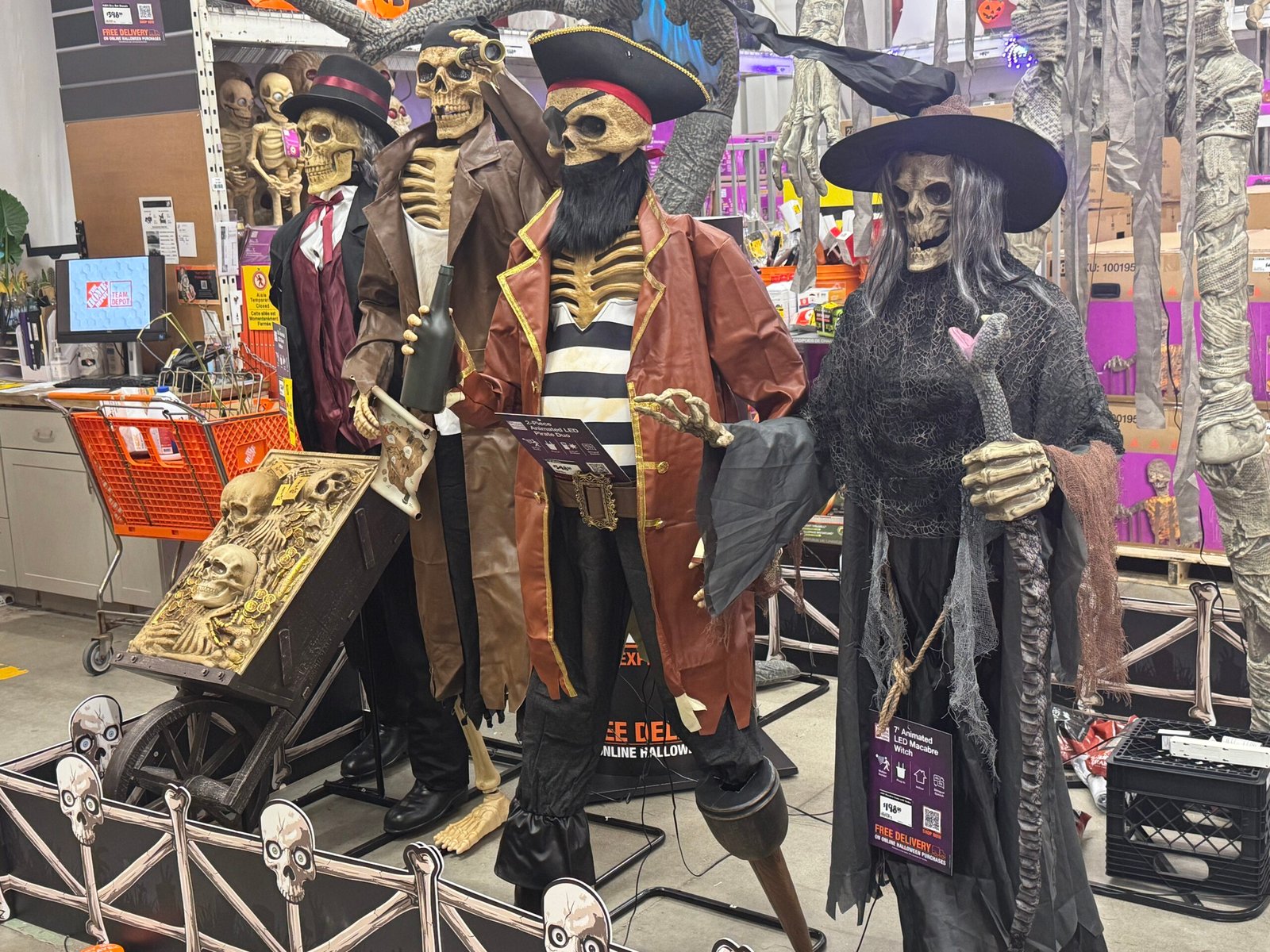
If you stroll along any major avenue of a large home-improvement store from September through October, you’ll come across a situation that is both funny and clearly impressive. Image_0.png shows the heart of one such scenario: an carefully arranged ‘Aisle of Screams’ at a Home Depot, in which a group of life-sized, animated skeleton figures has been placed with deliberate planning. The particular arrangement featured here—which focuses on a Pirate Captain, a refined “Dapper skeleton”, and a disturbing “Macabre Witch”—is no random assortment of spooky plastic.
On the contrary, it is a brilliant combination of heavy seasonal merchandising, innovative animatronic technology, and the psychological concepts behind the ‘Impulse Alley’. By examining this one photograph we can gain important insights into retail strategy and the thriving seasonal economy. This is not merely about selling Halloween items; it’s about designing an experience that turns passive shoppers into buyers of expensive props. We will look at how retailers such as Home Depot use complex sensory stimuli—combining LED lighting, coordinated movement, and textured materials—to produce a strong sense of consumer immersion.
We will also look into the logistics of ‘just-in-time’ seasonal supply chains and explain why the 12-foot giant is not actually the best-selling item. Most importantly, we will examine the refined ‘prop-stacking’ technique seen here, which makes use of specific character types (such as the Pirate and the Witch) to increase the average transaction value by promoting the sale of accessories. The photograph serves as a datum: it proves that the struggle for the Halloween consumer is not won simply on the basis of quality, but through exceptional in-store visual displays. In this analysis, we will examine every aspect of the matter.
SECTION 1: Scale Architecture and the “Over-Sized” Psychological Effect
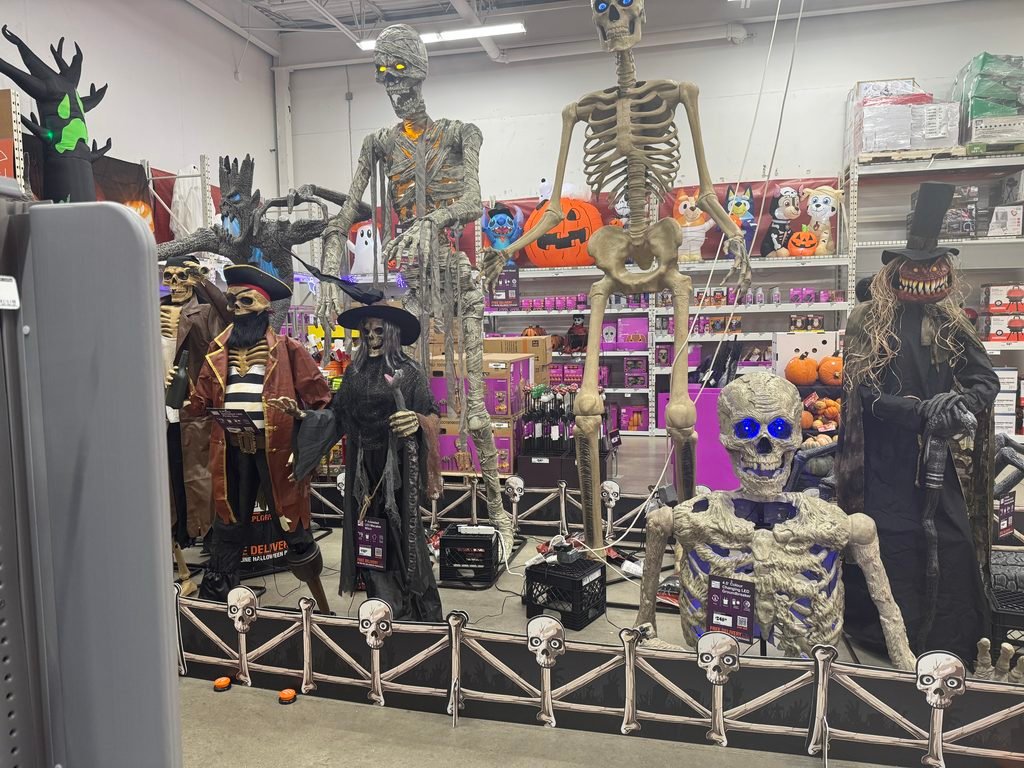
If you step back to get a full view of the retail display floor as shown in Image_1.png, it is immediately obvious that there has been a deliberate change in the vertical arrangement of the space. Rather than depending just on eye-level, life-sized animatronics, big-box retailers now deliberately design a hierarchical vertical scale which takes centre stage in the consumer’s line of sight. At the top of this arrangement are immense, iconic displays—such as the huge 12-foot Giant Skeleton and the similarly imposing wrapped Mummy prop—which are situated directly behind the usual row of 6-to-7-foot characters and act as ‘anchor beacons’ within the store.
From the point of view of environmental design, the sharp difference in height causes at once a psychological reaction known as the “awe effect”. The retailer achieves this by making shoppers look upwards at the immense, skeletal shapes, thus breaking the dull visual pattern normally formed by standard hardware racks and industrial lighting. The sudden change in scale disrupts ordinary shopping habits and causes foot traffic to slow down and physically stop in the main aisle. Moreover, the huge physical presence of these enormous figures creates an irresistible “photo opportunity” area, encouraging organic sharing on social media which in turn acts as free brand promotion.
SECTION 2: Ground-Level Anchoring and Multi-Tiered Composition
The great vertical extent is complemented by a purposeful increase in density at ground level. In the lower right part of the foreground, a color-changing LED groundbreaker skeleton projects directly from the floor surface and is surrounded by a low, stylised bone fence which forms the perimeter. The arrangement, which includes floor-level groundbreakers, human-sized props at mid-level (such as the Pumpkin-headed Reaper and the Pirate Duo), and giant skeletons that rise to skyscraper proportions, makes sure that the shopper’s line of sight is constantly engaged no matter where they look.
Noticeably, each character occupies a distinct atmospheric niche:
The Groundbreakers: Introduce price levels for the entry-level and mid-tier ranges with a strong visual effect by using dynamic internal LED lighting (for example, glowing blue eyes and illuminated ribcages).
The middle-ranking characters include intricate storytelling features such as pirate costumes, macabre witch robes, and pumpkin reapers, and these are fitted with motion sensors as well as interactive demonstration buttons which are positioned directly along the fence boundary to provide a tactile experience.
The giant anchors serve as high-end trophy items, positioning the retailer as a destination for serious Halloween enthusiasts.
By placing interactive trigger buttons directly on the barricade floor alongside these high-margin seasonal products, the layout changes passive observation into active play. The layered and high-density display not only increases profitability per square foot but also creates an unforgettable and immersive retail experience.
SECTION 3: Creating Thematic Variety and Attention to Material Quality in the Animatronic Props
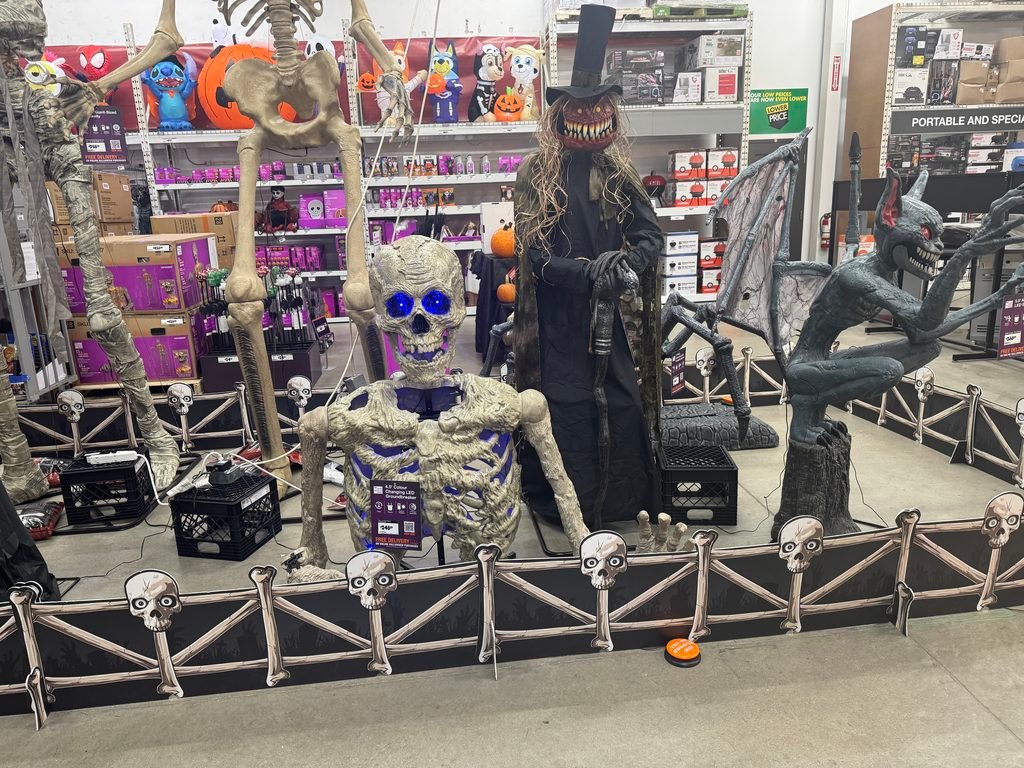
When you look closely at the specific items shown in Image_3.png, you can see how contemporary seasonal props make use of different material textures, specially shaped designs, and clear character types to meet a range of consumer preferences. Instead of providing repeated skeletal versions, retailers select a wide variety of horror sub-genres all within one single display area.
The Gothic Fantasy Type (Winged Gargoyle / Bat Demon): On the right-hand side of the enclosure is the winged gargoyle with a stone-like texture, adding a dark fantasy and gothic touch. It is made from high-density molded plastics and has weathered stone painting applied to it, so that it looks like heavy masonry yet is light enough to be assembled at home. The aggressive stance, the obvious ribbing, and the sharp claws all appeal directly to home decorators who are seeking classic horror or a haunted castle kind of aesthetic.
The Folk Horror / Jack-O’-Lantern Monster: Situated next to the gargoyle is a tall, thin monster with a pumpkin head, wearing a top hat and tattered black robes. The contrast between the highly detailed, toothed gourd head and the frayed straw or twine neck gives off a rural ‘folklore horror’ atmosphere. The small addition of a crooked wooden cane gives the character a personal touch and some narrative background, making it seem like a specific individual rather than just another generic skeleton.
Subterranean Lighting and the Integration of Animatronics: In the lower central position there is a 4.5-foot color-changing LED groundbreaker skeleton. By using internal diffusion panels inside the translucent ribcage, the unit produces a strong, electric-blue light that creates dramatic under-lighting on the surrounding props. You can observe how the power equipment (milk crates, extension cords, wire harnesses) is neatly hidden behind the groundbreaker and the perimeter fence. This arrangement shows how retailers handle the high electrical demands on the floor while still keeping the visual presentation clean.
SECTION 4: The Mechanics of Retail Display and “Try Me” Floor Marketing
In order to increase conversions, these displays make use of tactile floor-level triggers, such as the orange “TRY ME” foot-pad button that is visible close to the fence edge. In busy areas, motion sensors can fail because of the constant movement of feet; manual floor pads ensure that customers get immediate gratification. When the button is pressed, the animatronics respond with synchronized audio signals, head movements, and jaw actions, thus connecting the experience between simply watching and actively engaging emotionally. This interactive merchandising system turns high-priced items (in the $200 to $300 and above range) into enjoyable, entertaining experiences for families, which helps justify the higher price before the customer even reaches the checkout lane.
Retail strategy and placement (Lessons from image_0.png)
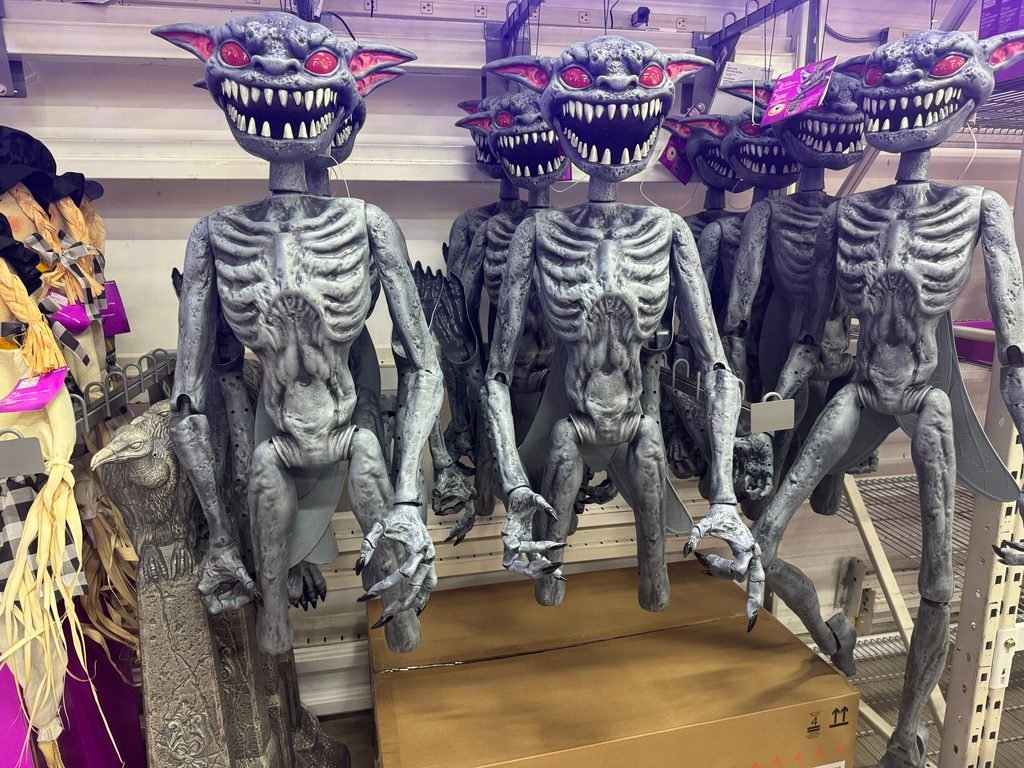
The image is a outstanding example of the way in which retailers can use bulk to generate interest, although this approach also presents a problem. The ‘shelf packing’ effect mentioned has a number of consequences:
Positive (Visual Overwhelm): When a whole row of these gremlins is present, they form a huge and highly eye-catching wall made up of red eyes and teeth. In a shop, the effect of having an ‘army of gremlins’ will attract shoppers who are coming from several aisles away.
Due to the way they are closely packed, the separate shape of each gremlin can no longer be seen; what remains is a confusing jumble of grey plastic and wires, which makes it difficult to make out the detailed claw work.
For a retailer, a more effective method of display would be to place the items in separate locations, such as putting two or three of them in different spots—with one on a high ‘perch’ shelf and another on a low fireplace mantel mock-up—thus showing their versatile placement.
Buyer’s Value Assessment
From a consumer value perspective, this product hits a strong middle ground:
Category Assessment Strategic Value for the Consumer
The price is likely to be between $30 and $50 USD, depending on its size and complexity.
There is a high perception of value regarding a motion or sound prop of this size.
The material is blown-mold plastic (light and strong), which makes the prop easy to transport and attach using fishing line or rope, and means that heavy-duty stands are not required.
Interaction – The sound and eye light up when motion is detected. This gives an outdoor or indoor display an active feature and stops it from appearing as a mere static plastic statue.
The storage option does not break down, though its ‘crouched’ shape is relatively compact. It fits more easily into standard storage totes than into large, multi-piece standing figures.
The Verdict for Halloween 2024
The Zombie Winged Gremlin is a sturdy and well-made animatronic which is ideal as a ‘perching’ prop. It is detailed enough to serve as the highlight of a fireplace display and at the same time light enough to be used in a tree-hanging scene. However, its large size when placed on retail shelves has both advantages and disadvantages in that it draws attention by reason of its volume, but its detailed features need more room in order to be properly appreciated. In a buying guide, the item should be recommended for its high contrast and versatility, with the caveat that its full potential is only achieved when it is displayed properly outside of a crowded retail aisle.
Article Reference & Credits
Publisher & Media Owner: Curated Scope (https://curatedscope.com/)
Content Creator / Author: Curated Scope
Photography Credits: All photographs and visual media featured in this article were captured by Curated Scope and are protected under copyright
Licensing & Usage: No part of this text or image content may be reproduced, republished, or redistributed without explicit written permission and proper source attribution back to Curated Scope