
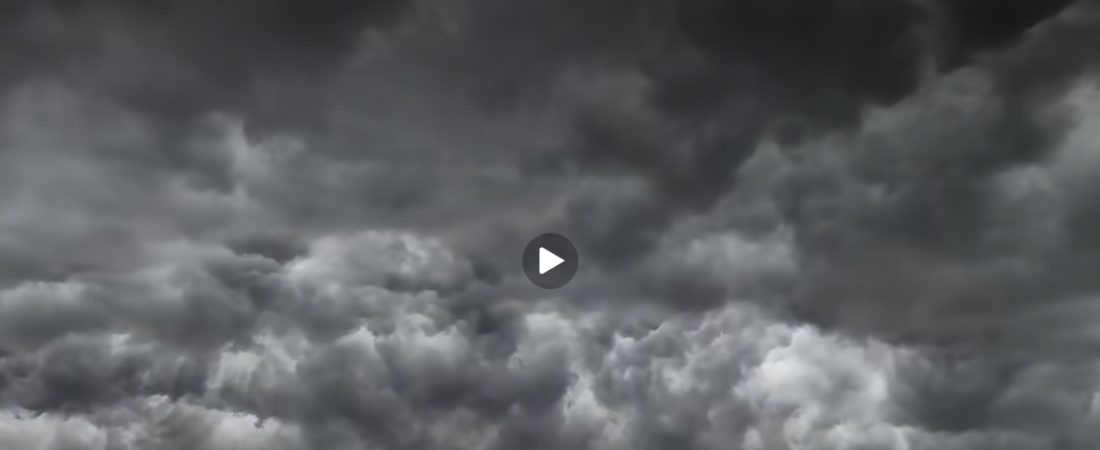
Unlocking October 2026’s Extreme Weather: Global Storms, Volcanic Shifts, and Rare Atmospheric Wonders
In early October 2026 the weather conditions observed all over the world show an exceptionally complex situation regarding Earth’s changing climate system. There have been heavy downpours in the Mediterranean region leading to sudden flooding in cities, strong mesocyclone activity in the American Midwest and uncommon solar optical phenomena in both Southern Europe and Asia, indicating a high degree of atmospheric variability. In order to understand these events it is necessary to examine in detail the thermodynamic forces, the hydrodynamic principles and the radiative mechanisms which are responsible for such extreme weather patterns.
Mediterranean Atmospheric Instability and Urban Flash Floods
In early October a quite distinct area of low pressure moved over the western Mediterranean, producing conditions favourable for severe convective storms along the coast of Spain. The collision of warm, moist air masses coming over the Mediterranean Sea with colder air at higher levels caused intense local episodes of precipitation, particularly in the cases of Barcelona and Albacete.
In Barcelona the convective activity ended with severe electrical storms which were associated with short-duration, high-intensity rainfall over the urban catchments. Because the urban areas were made up mainly of impermeable concrete and asphalt their infiltration capacity was quickly exceeded. The surface runoff that resulted turned the street network into channels capable of carrying water at high speed. This kind of hydrodynamic behaviour is marked by rapid peak discharge rates, since the storm sewers become surcharge-bound as a result of the large volume of water entering the drainage system within a short time.
In Albacete, severe flash flooding showed off the destructive power of kinetic energy in cases of uncontrolled water flow. If large amounts of water collect in areas that are sloped and urban, hydrostatic pressure rises quickly, and the change of the flow from subcritical to supercritical conditions generates a drag force large enough to unsteady heavy objects, such as cars that are parked. The transport of sediment, debris and vehicles along the street corridors also hinders the natural drainage routes, thus increasing the depth of flooding in the area and the risk to municipal infrastructure.
Severe Mesoscale Convective Systems and Tornadogenesis in Kansas
In North America severe convective instability appeared in early October over the Central Plains of the United States, in the area around Sylvan Grove, Kansas. The region saw the development of multi-cell thunderstorms and discrete supercells as a result of strong vertical wind shear and elevated values of Convective Available Potential Energy (CAPE).
Tornadogenesis takes place when intense horizontal vorticity that exists in the ambient air within the planetary boundary layer is tilted into the vertical plane by a strong updraft of a severe thunderstorm. When the conditions are optimal in terms of low-level moisture, the ambient lapse rate, and directional wind shear, several separate vortex filaments can form within one parent mesocyclone. This led to a rare multi-vortex or twin-tornado occurrence over the open land area of Kansas.
The huge difference in pressure between the centre of these tornadoes and the surrounding ordinary atmosphere results in strong suction forces. When the vortices pass over open fields, soil, vegetation and structural debris are sucked up into the main updraft, forming thick clouds of debris. The kinetic energy produced by winds going beyond certain structural limits shows how great the power really is in mesoscale convective systems at times of change in the season.
Geotechnical Failures and Mass Wasting in Mountainous Terrain
In the hilly area of Shimla, India, local hydrological conditions caused catastrophic mass movements on the steep slopes of the Himalayas. Mountainous areas with fractured bedrock and weathered soil layers are very sensitive to changes in the pressure of water in the soil during periods of heavy rainfall or rapid saturation.
If moisture gets deep into the material of the slope, the positive pore water pressure causes a reduction in the effective stress along the geological shear planes. A slope failure takes place when the shear stress caused by gravity is greater than the shear strength of the soil and rock matrix. The rockfalls and debris avalanches that result speed down steep inclined angles, picking up speed and more material as they go downhill.
The severe operational hazards to transportation infrastructure caused by mass wasting close to human transit corridors are evident, since bridges and structural retaining walls located at the foot of steep slopes have to endure huge dynamic impact loads from falling boulders and from saturated soil mass, highlighting the importance of having continuous geotechnical monitoring and stabilization facilities in susceptible mountainous areas.
Volcanic Dynamics and Eruptive Physics at Nevados de Chillán
There was also a great deal of activity on the solid Earth apart from atmospheric and hydrological hazards; at the Nevados de Chillán volcanic complex in central Chile eruptions caused明显的 ash plumes and steam to escape from its snow-covered summit.
Eruptions of this type are caused by the exsolution of gases which are dissolved in the magma—mainly water vapour, carbon dioxide, and sulphur dioxide—as the magma rises to regions of lower lithospheric pressure. The gas bubbles expanding quickly inside the magma conduit break up the surrounding viscous magma into pyroclastic material, such as fine volcanic ash, lapilli, and larger ejecta.
When hot lava fragments come into contact with surface snow and ice caps, there is a quick exchange of heat. This thermomechanical interaction results in the formation of large steam plumes (which are called phreatic or phreatomagmatic phenomena) and raises the chance of local meltwater being produced. Without proper management, the fast melting of snow on the slopes of a volcano can cause loose volcanic material to be moved around and thus produce destructive volcanic mudflows, known as lahars, which move quickly down the river valleys around the complex.
Atmospheric Optics: Light Diffraction, Halo Arrays, and Auroral Excitation
Together with the high-energy storm systems, October 2026 saw a number of remarkable optical effects caused by the complex interaction of light with ice crystals, water droplets, and high-altitude gas molecules in the upper atmosphere.
- Cloud Iridescence and Pileus Caps
Cloud iridescence happens when small water droplets or ice crystals scatter light, creating rainbow-like colors. This effect often appears near the sun or moon. Sometimes, a thin, smooth cloud forms over a growing cumulus cloud. This is called a pileus cap. The pileus cap can show strong iridescence because its droplets are very small and uniform in size. These bright colors usually last only a few minutes before the cumulus cloud pushes through and breaks up the cap.
In places such as the Philippines, Indonesia and Thailand, rapid convective updrafts caused moist air layers to be lifted upwards, resulting in the formation of smooth, cap-shaped cloud formations called pileus clouds. Since the supercooled water droplets in the pileus cloud remain of equal size, sunlight hitting the clouds is diffracted. The light waves bend around the tiny droplets and overlap one another, producing bright, spectral interference patterns featuring metallic pastel tones of pink, green and gold.
- The 22-degree Solar Halo and the Circumcircular Features
In southern Europe, especially in the area near Sarrià in Spain, people recorded a bright, fully developed 22° solar halo. The halo is formed when sunlight goes through ice crystals that have a hexagram shape and are hexagonal in form, which are floating in high-level cirrus clouds. The light enters one face of the crystal and then passes out through an alternate face, resulting in a minimum angle of deviation of 22 degrees. It is this exact refracting angle that causes a ring of light to appear around the sun. - High-Latitude Auroral Displays
Over at higher geomagnetic latitudes in Canada, intense interactions between the solar wind caused vivid green auroral ribbons to appear. The Earth’s magnetosphere directs energetic solar particles (that is, electrons and protons) along the magnetic field lines towards the upper atmosphere at the polar regions. These fast-moving particles collide with ordinary atomic oxygen at altitudes ranging from 100 to 300 kilometres, thereby exciting the oxygen atoms. When the atoms revert to their ground state, they emit energy in the form of green photons (with a wavelength of 557.7 nanometres), thus creating a dynamic display of light in the night sky.
Global Atmospheric Trends and Scientific Takeaways
The atmospheric and geological events that were recorded in October 2026 act as a clear indication of the way in which Earth’s climate and geosphere are interconnected. A high level of thermal energy in the oceans causes intense precipitation and flash flooding in urban areas; steep atmospheric lapse rates lead to the formation of violent mesocyclones in the mid-latitude continental interiors; and processes occurring at high altitudes produce spectacular optical effects as a result of accurate crystalline refraction. It is essential to monitor, model, and understand these various environmental systems if early warning systems are to be improved, civil engineering resilience is to be enhanced, and human knowledge of global environmental dynamics is to be deepened
REFERENCES:
Video: This Is the World Today. October 2026 Part.1
Video URL: http://www.youtube.com/watch?v=EQ-9nsI7L0c
Source: World of Signs, (published on: October 4, 2026).
Summary: The video provides a full global review of meteorological and geographical aspects, covering the major natural events that took place in early October 2026. It includes severe urban flash flooding in Barcelona and Albacete, in Spain; strong winds and squalls in Sydney, Australia; tornadoes in Sylvan Grove, Kansas; huge rockfalls in Shimla, India; volcanic ash eruptions at Nevados de Chillán in Chile; and rare atmospheric phenomena such as pileus cloud iridescence in Southeast Asia, a 22° solar halo in Spain, sun dogs in Croatia, and bright Northern Lights over Canada.